Finding Your Ultimate Mentor
“What kind of guidance actually lands for me?”
Who teaches you well is a chart pattern: the kind of authority you accept, the kind you fight. The OrbitWise Report reads that pattern against the quarter you are in and names what to look for, plus the windows that favour the search.
Years of good advice, and almost none of it changed what you actually did.
You have asked. A senior colleague over coffee, a paid programme, a manager who agreed to check in monthly and stopped after the second month. Some of what came back was genuinely good. You wrote it down, you agreed with it in the room, and you carried on exactly as before. Meanwhile something said badly, by someone you did not particularly rate, went in and stayed in, and you still work differently because of it.
Three more years on the same ward. The certification nobody told you was the one that counted. A promotion taken without anyone explaining what it closed off. What is missing is a way of telling early which version of it reaches you, and the usual method of finding out is to spend two years on the wrong kind.
Mentorship is run as a search problem. The deciding variable is on your side.
Every guide to mentorship is a guide to acquisition. Find someone ten years ahead, keep the ask small, arrive with an agenda worth the hour. Every one of those moves is a move on the other person, and the whole method marks itself successful the moment somebody senior agrees to the meeting. Nothing in it measures what happens in the weeks after that meeting.
Supply is rarely what fails. Most people can already name two or three who would give them an hour. The failure sits on the receiving side, where no guide looks. The same sentence in the same tone goes into one person and bounces off the next, and credibility is not the difference. It is the register the listener is built to take instruction in. Some move only on a demonstration. Others need the load handed to them before anything goes in. A few take correction perfectly with the door shut and stop hearing it in front of colleagues.
The register you resist hardest is usually the one landing. Guidance you accept easily tends to be guidance you had already half agreed with, while the sentence that has you defending yourself on the spot has found something real. Only one chart is involved in this read, and it is yours: what gets through, what you nod at and drop by Friday, and what you object to all week before quietly going and doing it.
Your ear opens to some voices and closes to others, and nobody has ever told you which.
Instruction arrives in registers, and no two people receive through the same ones. The one you are thinnest on costs you the most, because anybody who teaches in it gets written off as not very good at it. Your answers are written against this, from the birth data you give at intake and the questions you write yourself.
The month in front of you ranked day against day into peak, strong and steady bands rather than against a fixed scale, so the eleventh and the twenty-fourth stop being interchangeable. Two or three protected windows sit inside it carrying specific dates: the weeks that favour making the approach, and the weeks better spent on the person already in the building.
Drawn from your real chart in The OrbitWise Report, delivered within 48 hours.
Ask my three questionsSix better things to ask than who should mentor me.
The OrbitWise Report answers three questions of your own, alongside five short context questions it always asks. Nearly everyone wants to spend their own on who to approach. These are the ones that decide what happens after somebody says yes.
Whether you want a mentor or a witness
Some people are not short of instruction. They are short of somebody who has watched the work closely enough that their approval means something. Those are two different asks and they build two different relationships. Booking a monthly advice call with a busy senior when what you needed was one person watching you run a shift, take a class, or price a job is how a good arrangement dies of politeness.
The correction you have already had three times
Three people, three jobs, roughly the same sentence, and you filed each one under their misreading of you. That repeat is the cheapest evidence you own and nobody has ever asked you for it. Bring it as one of your own questions and it gets read against your structure rather than against your account of the people who said it.
The teacher you already wrote off
Most people have met someone whose guidance would have landed and dismissed them on manner, seniority, or the way they put things. Ask which register you discount on sight rather than on content. The one you found abrasive two jobs ago may have been the only person operating in the register that reaches you.
What praise does to you this quarter
Correction gets all the attention and praise is the more dangerous input. For some it compounds and the work doubles that week. For others it closes the file early, or it spends the giver's credit so the next hard sentence arrives unusable. Ask what to request they hold back over the next four weeks, and say it at the first session rather than the fourth.
Commit now, or ask for one session
The offer on the table is a standing arrangement, and the honest options are to take it now or ask for a single session and decide again after it. Those two are not the same commitment and they do not want the same week. Bring it as one of your own questions and the answer comes back with a week attached rather than a temperament.
One rung up, or twenty years up
Two people have offered and only one approach fits this quarter. Instruction from someone a rung ahead lands differently from instruction from someone twenty years ahead, because proximity turns teaching into comparison. Some cannot take it from anyone close enough to be a rival. Others cannot hear anybody they cannot picture becoming. Ask which of the two this month's approach belongs to.
Twenty to twenty-five pages, and what each one carries.
Your own questions, in your own words
Free-form, written by you, never picked off a menu. If your quarter holds whether to ask the ward sister, whether to pay for the programme, and whether to go back to the person you fell out with, those are your own, phrased the way you would say them.
Three answers, a page each
Every question answered directly on its own page, dated and prescriptive: what to do about it, and which week to do it in. Plain language throughout, and where the chart is named it is explained in the same breath.
The ninety days, ranked against each other
Your month sorted into peak, strong and steady, each day ranked inside your own window rather than against a fixed scale. An absolute scale grades a strong month uniformly strong and leaves you nothing to choose between.
Two or three protected windows
Named weeks carrying specific dates, with what each one favours. The week that holds a first approach and the week that holds a difficult second conversation are not usually the same week.
Within a day, twenty to twenty-five pages
Produced and delivered within 48 hours of your intake. Short enough to read once when it arrives and again in the hour before you send the message or walk into the room.
A closing note on the deeper tiers
A short close, signed OrbitWise, naming the higher tiers and what each one opens, for the point where the question stops being this quarter's approach and becomes the whole shape of the work.
The OrbitWise Report is cast for the ninety days from your cast date and is built to be re-cast each quarter on the data you have already given. When the question widens past the quarter into the years the training belongs to, the closing note names the tier built for that horizon.
They say yes in week two, and every question after that is a new one.
Your own questions come back answered and dated, and the quarter sorted into bands. None of that exists until the material underneath it does: a chart drawn from your birth details, the period ladder underneath it, the questions you write in your own words, and the reasoning kept beneath every date the report protected. Asking is one act. The material that made them possible is not spent by it.
From there it holds the subject rather than the document: the full text of the report, and everything you have told it since. The senior who said yes offers a standing half hour, and by week five you dread it. Ask whether the fit is wrong or whether you are five weeks past the useful part of it. On whether a course is accredited it has no view, and points you to the awarding body.
What your reading learns about you is kept. The next thing you read starts from everything the last one knew.
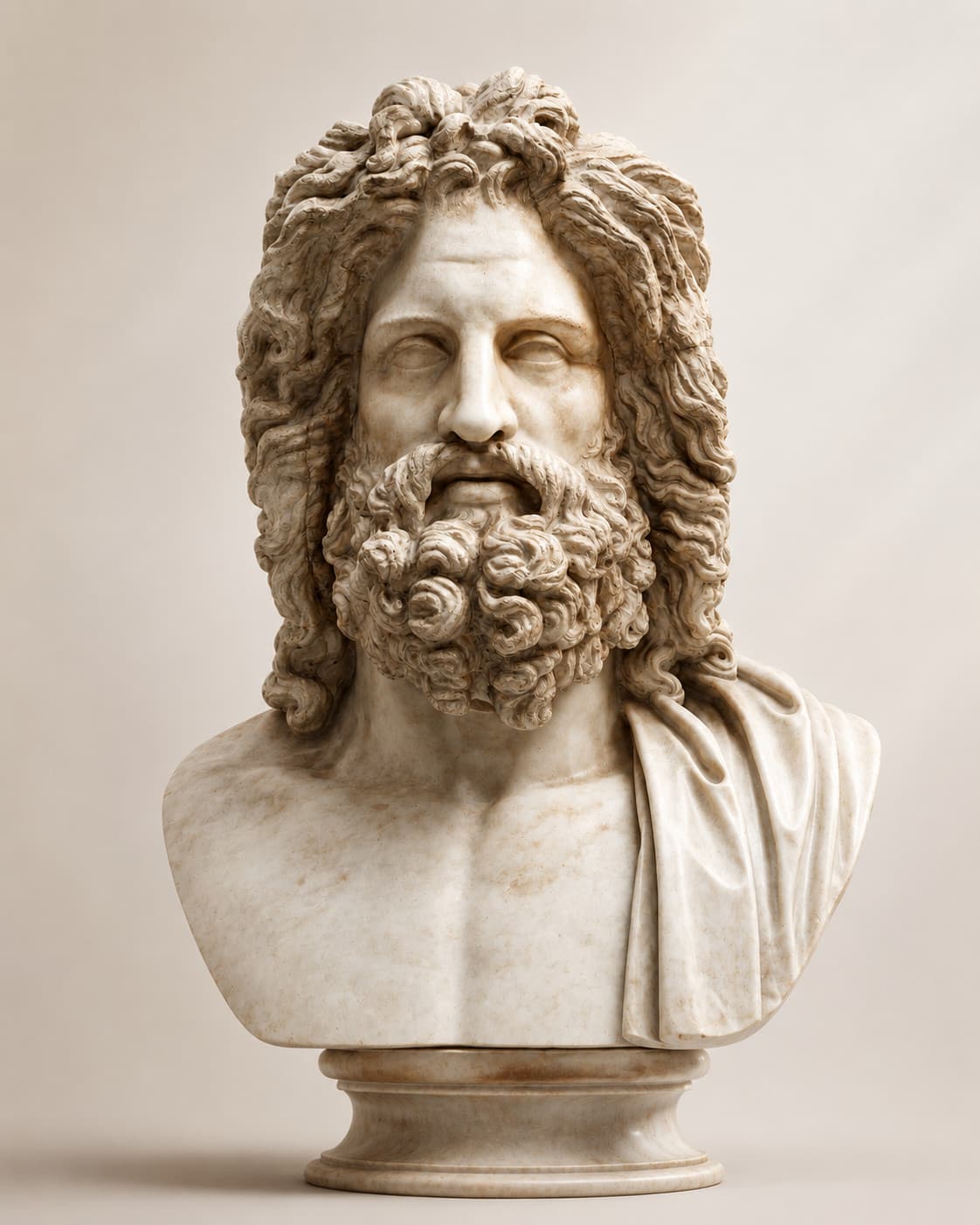
Aster runs on a monthly plan. The deeper readings include a run of free days with him, and the credits the plan gives you each month go toward your next Report. Subscriptions are not open right now. See what Aster costs.
Our position.
Free will and personal choices matter most. Teaching happens between two people in a room, and in what you do in the weeks between those rooms, and no read moves an ounce of that off your desk. If you never make the approach, nobody arrives to make it for you.
It cannot see whether the person offering to teach you is any good, whether they have the time, or whether they will still be in the post in March. You find those out by talking to people who have worked under them. What it names is the register you can take instruction in. Matching that against the people in front of you is your job, and it needs nothing from their side.
And it is one instrument among several. Take your professional body's view on which qualification is recognised, your union representative's on what a move does to your terms, and a careers adviser's on the route itself. The read answers a narrower question: which register reaches you, and which week to make the approach in.
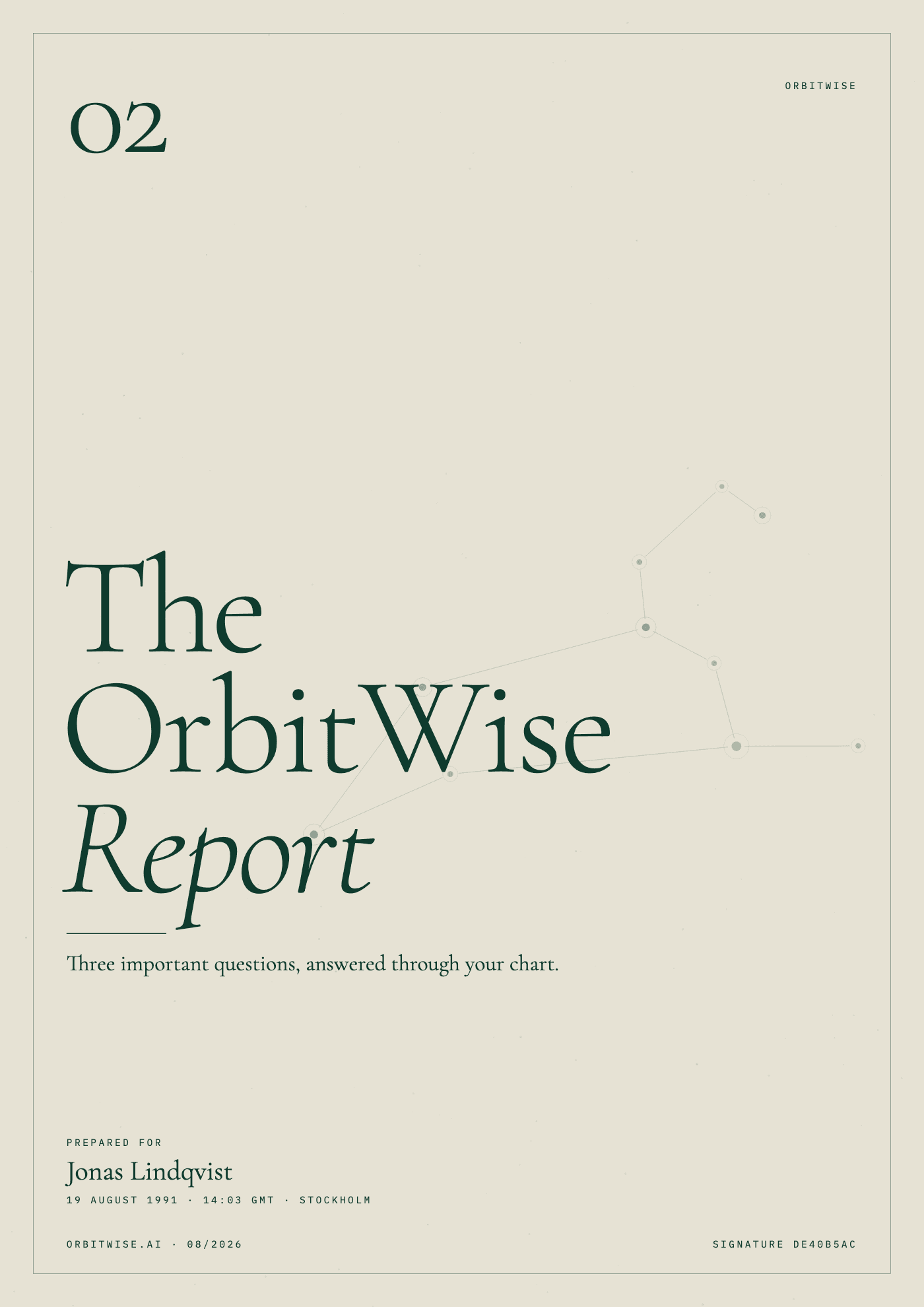
The artefact
The OrbitWise Report
- Three questions chosen by you
- Personal answers grounded in your chart
Bring the question: “What kind of guidance actually lands for me?”
No account needed to buy · delivered within 48 hours.