Wedding & Commitment Date Selection
“Which date do we choose?”
Bring the date to the OrbitWise Report as a direct question. You get the windows across the next ninety days the chart favours for vows and commitments, and the ones to let pass. It reads your chart alone, so it speaks to your own condition, not to the pair.
Everything about the wedding is negotiable except the date on the certificate.
You will spend nine months on the venue, the guest list and the seating, and about twenty minutes on the date. The date got chosen by whichever Saturday the hall still had free, an in-law's travel window, and a deposit that had to clear by Friday. Everything else about that day is a choice the two of you made. The date is a residue of other people's calendars.
Then it becomes the fixed record. It goes on the certificate, the registry entry, the visa file, the joint account, the passport application, and it comes back every year for as long as the marriage runs. If it sits in the week one of you is always underwater at work, you will spend three decades marking it late and apologising for it. Nobody prices that while the deposit is due.
Everyone tells you to find a date that works. Nobody asks who it has to work for.
Two sets of counsel arrive when a date is being set, and they contradict each other without either being useful. The first is logistical: work backwards from the venue, the season, the flights, the cousin who cannot travel in August. The second is inherited: an aunt produces a list of auspicious days and everyone nods at it politely without knowing what it measures. One optimises for attendance. The other optimises for a tradition nobody in the room can read. Neither is looking at the two people making the promise.
What a chart read can answer is narrower than either, and more useful. The OrbitWise Report reads your birth data, not your partner's, so it is not a verdict on the pair. What it names is your own condition across the next ninety days: which of them find you able to begin something binding, and which find you able only to finish, settle and tidy what is already open. A vow is a beginning that has to hold. It is not the same act as a party, and the days that carry the two are not always the same days.
The date that clears every diary is usually the one with least of you in it. Couples fix the day the family argument finally stops, and a settled argument is not a settled decision. Inside any quarter some days carry a promise and some carry a celebration. They are rarely the same days, and the diary is only ever pointing at the second kind.
The wedding lasts a day; the date it is filed under lasts the whole marriage.
A date does not make a marriage, it files one. Which of these a binding promise would draw on most is what the read weighs when it answers your date question, and it names what the strongest of them asks of you in return. Read from your own birth data, resolved into a chart before the first line is written.
The next ninety days are not flat. The report ranks the thirteen weeks day against day into peak, strong and steady bands, then names two or three protected windows with specific dates: the ones that favour a promise, and the ones better spent on the paperwork, the guest list and the calls. A vow is a one-day act, so the dates arrive to the day.
Drawn from your real chart in The OrbitWise Report, delivered within 48 hours.
Ask my three questionsWhat couples never think to ask before they set it.
Most couples arrive asking for a lucky day, and a lucky day is not a thing anyone can sell you. The OrbitWise Report takes the questions you write in your own words, alongside the five it always asks. These are the ones worth the space.
Which day is the actual marriage
The registry signing, the religious ceremony, the reception, the civil appointment that happens weeks earlier for the paperwork. These are often different days, and only one of them goes on the certificate. Asked as one of your own questions, the answer names which act to place deliberately and which to let fall where the venue puts it, so you stop protecting a date that is only a party.
What the month is for instead
Some of the next ninety days will carry a promise and some will only carry a negotiation. A window that will not hold a vow often holds the conversation you have both been deferring: the money, where you will live, whose family gets December. Couples who spend the month that way reach the later date carrying less. The named alternative use of the month is the answer worth having, not an instruction to postpone.
The week you get handed back
An anniversary is not one day, it is a slot in the year returned to you every year the marriage runs. Put it beside the audit season, the school run's worst weeks, or the month one of you always travels, and the two of you will spend decades marking it in a service station. The ninety days before you set it are the only stretch in which that slot is still movable.
How far the window can bend
A registry needs notice, a venue holds a date for a deposit and not a day longer, and a celebrant books out a year ahead. A single favoured day is useless if the paperwork cannot reach it. The report names windows with edges rather than single dates, so a booking that slips by two days does not undo the choice you made.
Your default when a family objects
The real stall in setting a date is rarely the diary. It is a parent who stops replying, or who agrees in the room and works against it afterwards. Under that pressure you run a default: set the date anyway, defer until the objection dissolves, or shrink the day until nobody can object. You will run it whether or not you have looked at it. Named first, it becomes a position you can hold.
Whether the signing comes first
Many couples sign at a registry weeks before the ceremony, for a visa, a lease, an insurance policy, a hospital form. That makes the certificate date and the day everyone remembers two different dates, and it is the certificate that follows you. The same month produces two different records depending on the order. Make it one of your own questions and the order comes back with a date attached to each act.
What arrives, page by page.
Your date question, answered
The date question takes a full page to itself: the answer, dated and prescriptive, written for someone who knows nothing about astrology and has a venue holding a provisional booking.
Two more questions, in your words
Alongside the five it always asks, the OrbitWise Report answers the free-form questions you write yourself, one to a page. Those are yours to spend: the guest list, the money, the move, the in-laws, the second ceremony. No template decides them for you.
The ninety-day map
Your next ninety days ranked into peak, strong and steady bands. The ranking is relative, each day set against the others in your own quarter rather than an absolute scale, so the shape of the quarter is visible before a date is announced.
Two or three protected windows
Dated to the day, with what each window favours. A vow and a signing do not want the same week, and a party wants neither of them.
Dates named, or not claimed
The report either gives a date or does not claim a window. Sometime in the second half of next month is not something OrbitWise will send you.
The closing note
A short close, signed OrbitWise, naming the higher tiers and what each one opens, including OrbitWise Synastry, which reads two charts against each other rather than one.
The OrbitWise Report is cast for the ninety days from your cast date and delivered within 48 hours. When the question stops being the date and becomes the two of you, OrbitWise Synastry is the one that reads both charts.
A date is the first of the dated decisions a marriage asks you for.
One dated answer is the deliverable. Getting there puts the material on file: your birth data resolved into a chart, your own questions in the words you wrote them in, ninety days ranked day against day, and every window named beside what it was for. Setting the date spends one of those days. It spends none of the rest.
What holds it afterwards is an astrologer that already knows which date you chose and why. A year on the same question returns in different clothes: when to sign a lease together, when to tell them you are trying for a child, when the second ceremony should happen. Ask it and it weighs the timing against the periods your chart is running.
What your reading learns about you is kept. The next thing you read starts from everything the last one knew.
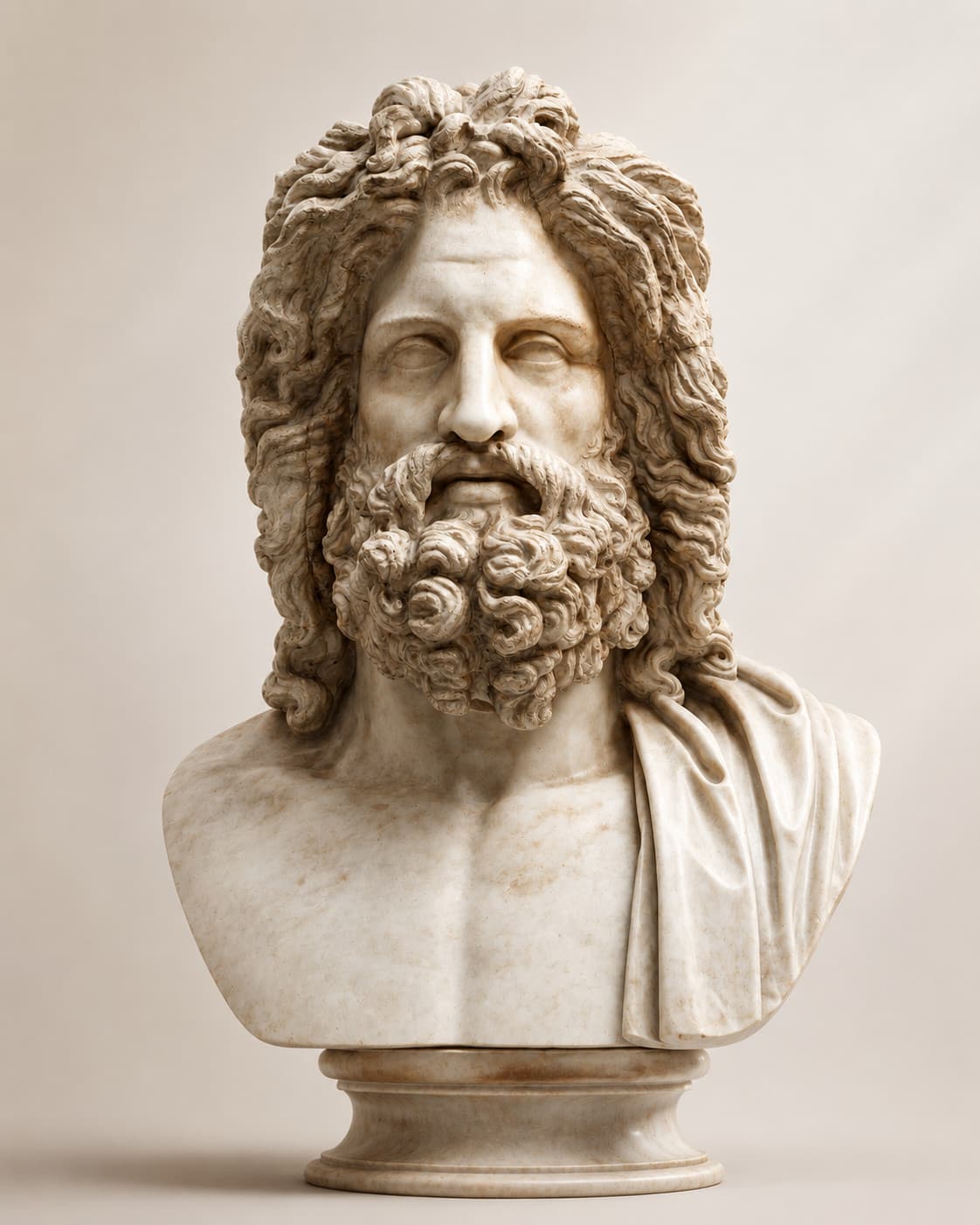
Aster runs on a monthly plan. The deeper readings include a run of free days with him, and the credits the plan gives you each month go toward your next Report. Subscriptions are not open right now. See what Aster costs.
Our position.
Free will and personal choices matter most. A well placed date does not make two people kind to each other in a bad year, and a badly placed one has never ended a marriage that was working. The promise is kept by the two of you, every ordinary week, and nothing in this read moves an ounce of that.
What this describes is the quarter, not the marriage. It ranks the next ninety days against each other and separates the ones that will carry a promise from the ones good only for arrangements. It cannot see your partner's chart, because the report reads yours alone. It forecasts nothing about whether the marriage lasts, and it will not tell you whether to marry this person.
And it is one instrument among several. Take the registrar's word on notice periods, a family lawyer's on any agreement you sign before the day, an accountant's on what marrying in one tax year rather than the next does to you both, and a counsellor's hour if the last six months have been hard.
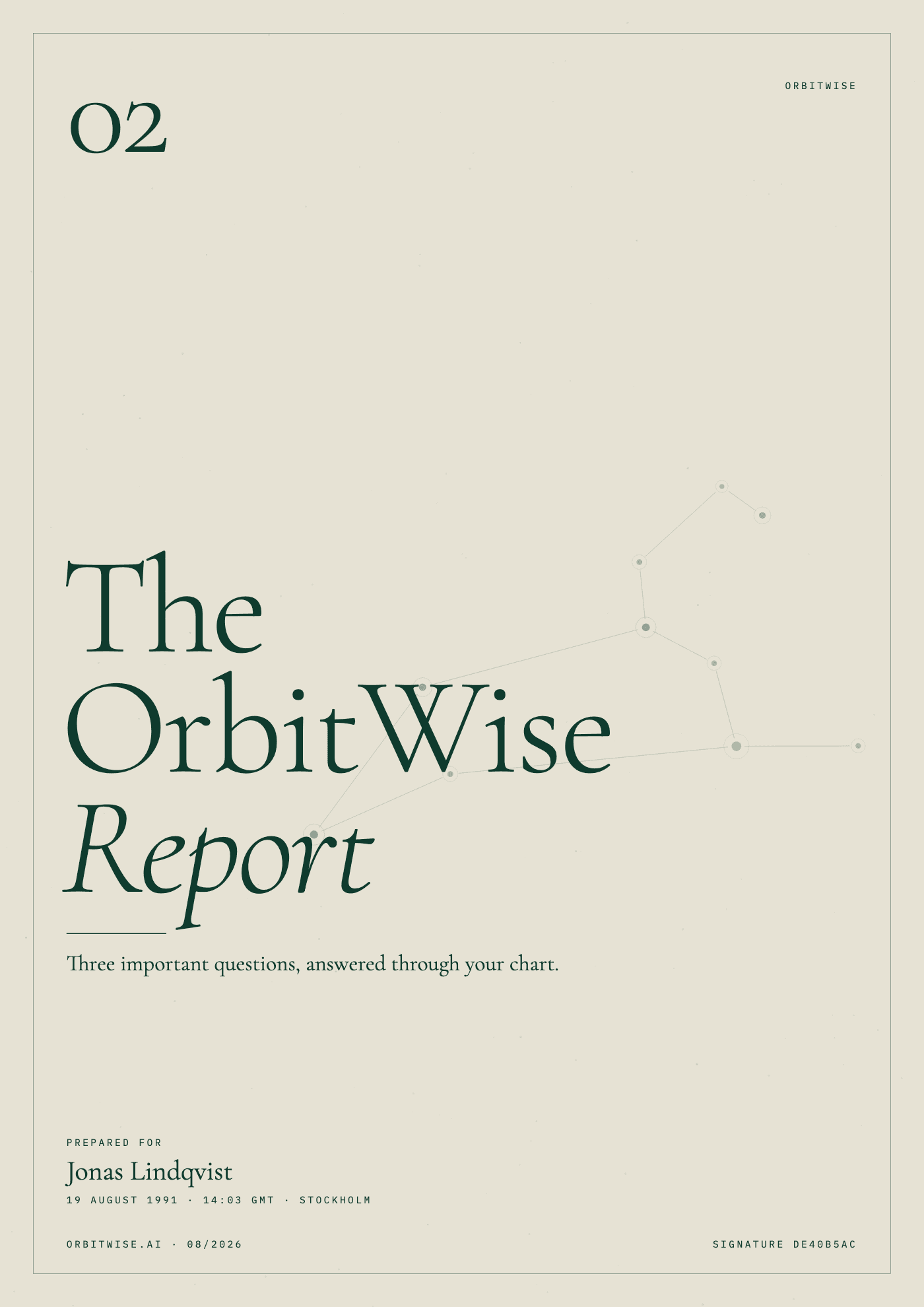
The artefact
The OrbitWise Report
- Three questions chosen by you
- Personal answers grounded in your chart
Bring the question: “Which date do we choose?”
No account needed to buy · delivered within 48 hours.